
The Swiss Energy Transition
The Threat of Cybercrime to Switzerland's Energy Ambitions
The energy sector globally is at the heart of the success or failure in our capacity to address the climate crisis effectively.
More specifically, this sector is at the intersection of intricate dynamics of a complex risk landscape, including fast-paced exponential technologies, as it undergoes a remarkable transformation, driven by the imperatives of sustainability and digital innovation. This transformation also brings forth new challenges, particularly in the realm of cybersecurity.
Transition and Transformation in Energy Landscape – Switzerland Continues to Pioneer
Switzerland, a country known worldwide for its pioneering use of hydroelectric power, is at the threshold of a significant transformation in its energy industry.
With a strategic plan to decommission nuclear power plants by 2034, it is poised to embrace an accelerated shift towards additional renewable resources like wind and solar power. The transition is emblematic of Switzerland's commitment to a sustainable, green future.
However, parallel to this seismic shift in the energy mix is another evolution, perhaps equally critical: the sweeping digitization of energy operations. Modernizing legacy systems with digital technology, integrating Internet of Things (IoT) devices into the grid, and deploying advanced analytics to optimize energy distribution are all part of this digital journey. This convergence of energy transition and technological innovation presents a set of unique challenges and opportunities.
Understanding the Cyber Threat Landscape
In an increasingly digital world, the energy industry's reliance on digital technologies makes it an attractive target for cyber attackers. These nefarious actors employ a variety of tactics, from sophisticated multi-stage attacks to specially designed malware that targets industrial control systems. The potential consequences of these cyber threats are not trivial; they can disrupt energy supplies, cause physical damage to equipment, and lead to safety hazards and environmental harm.
Although cyberattacks on the energy sector are a daily occurrence, to underscore the reality of these massive impacts they can have, consider some recent notorious cyberattacks on the global energy sector:
- The Colonial Pipeline attack in May 2021 disrupted the supply of gasoline and jet fuel to the U.S. East Coast. This ransomware attack, carried out by the group DarkSide, involved data theft and file encryption on the company's IT network.
- The SolarWinds attack in December 2020 compromised the networks of numerous U.S. government agencies and private companies, including several in the energy sector. A sophisticated state-sponsored actor, likely Russia, inserted malicious code into a software update from SolarWinds, a network management company.
- The Kuwait Oil Company attack in August 2020 affected the operations of the state-owned oil company. The hacker group ZeroX claimed responsibility, alleging that it had stolen 10 terabytes of data and demanding a ransom of $10 million.
- The Elexon attack in May 2020 targeted the internal IT systems of Elexon, a key player in managing electricity trading in the UK. A ransomware infection caused file encryption and communication disruptions. However, the national grid and electricity supply were not affected.
- The Triconex attack in August 2017 aimed at a petrochemical plant in Saudi Arabia. The malware Triton attempted to manipulate industrial safety systems, potentially causing severe physical damage. A technical error thwarted the attack, but it highlighted the potential for major explosions or fires.
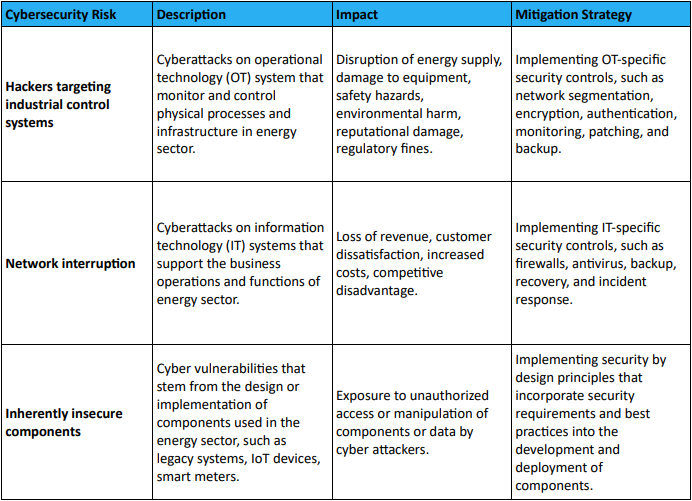
These incidents underline the serious cybersecurity risks facing the energy industry:
The Evolution of Cybersecurity: Next-Generation SOCs at the Forefront
In the face of a dynamic and evolving cyber threat landscape, it has become increasingly clear that the cybersecurity industry itself needs to evolve. Traditional Managed Security Service Providers (MSSPs), once sufficient, are now struggling to effectively address the heightened cybersecurity needs of the Swiss energy sector.
These traditional MSSPs have primarily been characterized by reactive measures, responding to incidents as they occur. However, as cyber threats become more sophisticated and stealthy, this approach proves inadequate. The sector's survival and prosperity hinge on the ability to anticipate threats, actively hunting for potential vulnerabilities and mitigating them before an incident occurs.
Enter the Next-Generation Security Operations Centers (SOCs). These are not merely a technological upgrade over their predecessors; they represent a fundamental shift in how cybersecurity is approached. They bring to the table a proactive mindset, deploying advanced technologies such as artificial intelligence and machine learning to predict and preempt cyber threats. This shift towards a proactive stance is pivotal for the Swiss energy sector as it undertakes its transformative journey.
Moreover, Next-Generation SOCs acknowledge the intertwined nature of IT and OT security, providing integrated services that correlate events across these traditionally separate domains. This integration is critical for a holistic understanding of the energy sector's cybersecurity landscape, facilitating a comprehensive and effective security posture.
Envisioning a Secure, Sustainable Future
In the face of this evolving landscape, the vision for Switzerland's energy industry extends beyond sustainability and resilience. It involves ensuring our integral role within the broader European energy ecosystem while preserving the security and reliability that users and stakeholders expect. With a proactive and adaptive security strategy in place, Switzerland's energy sector is ready to navigate this complex and dynamic landscape, all while securing a sustainable, brighter future for all.
This transformation isn't just about power grids and renewable energy sources; it's about people – the citizens who depend on a reliable energy supply, the workforce that keeps the lights on, and the next generation that will inherit the fruits of our efforts. By meeting the cybersecurity challenge head-on, we can ensure that our collective energy future is not just sustainable, but secure and resilient, too.